Best Orthopedic Cat Beds for Senior Cats 2026
The best orthopedic cat beds to ease arthritis in an aging cat. Compare memory foam, bolster height, washable covers, and low-entry picks chosen for senior cats.
A senior cat spends most of the day asleep, often 16 hours or more, which means the surface they rest on quietly shapes how they feel the rest of the time. Studies that x-rayed older cats found arthritis in the joints of the large majority of cats over 12, even when their owners had noticed nothing wrong. A thin, flattened bed leaves all that weight pressing on sore elbows, hips, and the spine. A proper orthopedic bed spreads the load, and many owners notice their cat settling faster and rising more easily afterward.
The picks below were selected by comparing foam type and thickness, entry height, cover washability, stability, and a wide range of verified owner reviews. We did not run hands-on lab tests; we evaluated specifications, materials, and owner feedback to find beds that genuinely suit older, stiffer cats.
Top Orthopedic Cat Beds at a Glance
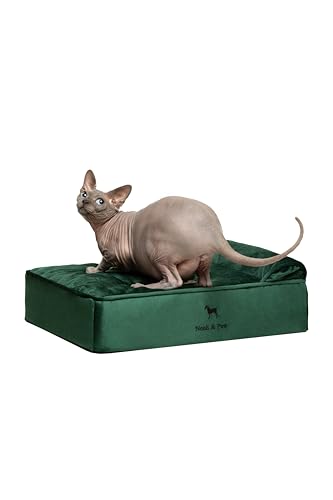
NOAH & PAW NOAH & PAW Orthopedic Cat Bed
Eggshell memory foam infused with cooling gel, water-resistant, washable

Bedsure Bedsure Orthopedic Cat & Dog Bed (28")
Waterproof orthopedic base with low couch sides and a washable cover
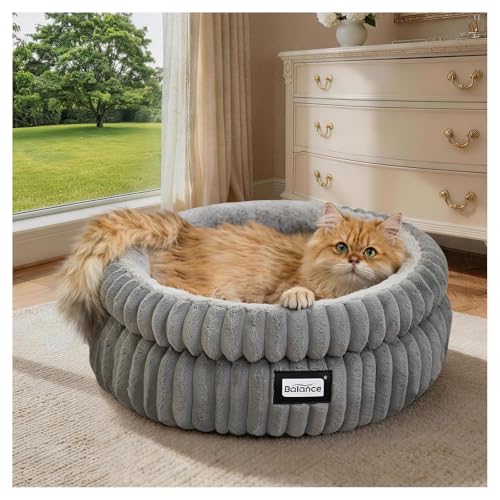
BALANCE BALANCE Round Bolster Cat Bed
Soft plush bolster rim for chin-resters, anti-slip washable base

EHEYCIGA EHEYCIGA Orthopedic Bed with Sides
Memory foam with low supportive sides and a non-slip waterproof bottom

Bedsure Bedsure Large Orthopedic Bed (35")
Roomy waterproof orthopedic bed for big cats or multi-cat households
Product picks are researched, not veterinary advice. As an Amazon Associate we earn from qualifying purchases.
Why an Orthopedic Bed Matters for an Aging Cat
As cats age, the smooth cartilage that cushions their joints gradually wears thin. The change is slow and cats are masters at hiding discomfort, so most owners never see limping. Instead the signs are subtle: a cat that no longer jumps to the windowsill, that sleeps lower to the ground, that grooms less along the back, or that seems grumpier about being picked up. Underneath those small changes are joints that ache when weight presses on them.
A standard fiberfill bed compresses to almost nothing within weeks, leaving your cat resting on the hard floor through a thin layer of fabric. Supportive foam behaves differently. It distributes the cat's weight across a wider surface so no single joint bears the full load, and it springs back rather than flattening. For a cat that spends two-thirds of its life lying down, that is a meaningful upgrade in daily comfort.
How We Chose
For a senior cat, the details that matter are not the same ones marketed to dog owners. We weighted:
- Real supportive foam: Memory foam or dense eggcrate at least 2 to 3 inches thick, not thin polyester batting.
- Low or open entry: A cat with hip or spine arthritis should be able to step in, not climb over a tall wall.
- Non-slip base: A bed that slides on hardwood unsettles a wobbly older cat and can cause a fall.
- Washable, ideally waterproof: Removable covers and a water-resistant liner matter for cats with kidney disease or occasional accidents.
- Right size: Big enough that your cat can stretch out fully, since stretching is how stiff cats keep limber.
Senior Cat Wellness & Care Planner
Track your aging cat's health, meds, vet visits, mobility, nutrition, and quality of life, all in one printable planner.
Memory Foam vs Eggcrate Foam
Solid memory foam conforms slowly to your cat's body, cradling the hips and shoulders while supporting everything in between. It gives the most even, targeted pressure relief and lasts longest, which is why it leads most of our picks. Eggcrate (convoluted) foam has a bumpy surface that ventilates well and costs less, but its peaks compress faster. Because cats are light, eggcrate holds up better under a cat than it would under a dog, so a quality eggcrate bed is a reasonable budget choice for a smaller senior cat. Many of the best beds combine both: a firm support base with a softer contouring top layer.
Bolster Height and Entry
A bolster rim gives a cat something to tuck against, and many older cats love resting a chin on a raised edge. The catch is that a tall bolster becomes a wall an arthritic cat has to heave over. Watch how your cat lies down. Chin-resters and curl-up sleepers usually do well with a low bolster. Cats that flop flat on their side, or that already struggle to step up, are better served by an open mat or a bed with one low cut-out side. When in doubt, lower is safer for a stiff cat.
Placement Tips
- Keep it warm: Senior cats chill easily, so favor sunny corners and rooms away from drafts and vents.
- Off cold floors: Tile and concrete pull heat away; a bed raised slightly or paired with a self-warming mat helps.
- Near the family: Most cats want to rest where their people are, not banished to a back room.
- Several beds: A bed on each level of the home means your cat never has to climb stairs just to lie down comfortably.
When to Talk to Your Veterinarian
An orthopedic bed is a comfort product, not a treatment. If your cat is reluctant to move, has stopped jumping, cries when handled, or has changed in appetite or litter box habits, book a veterinary visit. Effective feline arthritis care exists, including the monthly Solensia (frunevetmab) injection and other vet-prescribed options, and a supportive bed works best as one part of a broader comfort plan your vet helps you build.
Related Guides
- Best Heated Cat Beds for Arthritis - Add gentle warmth to foam support for extra joint relief.
- Arthritis in Senior Cats - Understand the condition that makes a good bed so important.
- Managing Chronic Pain in Older Cats - A broader look at keeping an aching cat comfortable.
Editor's Pick · Affiliate link
A Stainless Steel Fountain for a Senior Cat
Chronic kidney disease is the most common serious diagnosis in older cats, and moving water is the easiest way to raise daily intake. Stainless steel stays cleaner than plastic, which matters on a bowl that runs all day.
Frequently Asked Questions
Do cats really need an orthopedic bed?
Many senior cats benefit from one. By 12 years old, the majority of cats have arthritis somewhere in their skeleton, most often the elbows, hips, knees, and spine. A supportive foam bed spreads their weight and takes pressure off sore joints, so a cat that used to shift around restlessly often settles and sleeps more deeply. It will not cure arthritis, but it makes the 16 or more hours a day a cat spends resting far more comfortable.
What should I look for in an orthopedic cat bed?
Prioritize a solid memory foam or eggcrate foam base at least 2 to 3 inches thick, a low or open side so an arthritic cat can step in without climbing, a non-slip bottom, and a removable machine-washable cover. A waterproof inner liner is worth having if your cat has occasional accidents or kidney disease, since wet foam is almost impossible to clean and can grow mold.
How thick should the foam be for a cat?
Cats are light, so they do not need the 4 to 6 inches a large dog requires. A genuine memory foam or high-density eggcrate layer of about 2 to 3 inches is plenty to keep a 10-pound cat from bottoming out to the floor. What matters more than raw thickness is that the foam is real supportive foam, not thin polyester fiberfill that flattens within weeks.
Bolster bed or flat mat for an arthritic cat?
It depends on the cat. Many cats love a bolster rim to rest their chin and feel enclosed, and a low bolster doubles as a gentle support. But if your cat has significant hip or spine arthritis, a tall rim can be an obstacle they have to climb over. Watch how your cat lies down: chin-resters do well with a low bolster, while cats that sprawl flat often prefer an open mat.
Where should I put my senior cat's bed?
Choose a warm, draft-free spot away from doors and air vents, on a level surface, and ideally near where the family spends time so your cat does not have to choose between comfort and company. Senior cats feel the cold more, so a sunny corner or a warm room is ideal. Having two or three beds around the house means your cat always has a supportive place to rest without navigating stairs.
How often should I wash and replace the bed?
Wash the cover every one to two weeks, more often if your cat has skin issues, incontinence, or drools. Vacuum loose fur off the foam between washes. Replace the bed when the foam stops springing back, holds a permanent dent, or the cover no longer comes clean. A good orthopedic cat bed typically lasts two to four years.
My cat ignores the new bed. What can I do?
Cats are creatures of scent and habit. Place the bed where your cat already likes to sleep, rub a worn t-shirt or a used blanket on it so it smells familiar, and sprinkle a little catnip or a few treats on top. Avoid washing the cover for the first couple of weeks so it builds up your cat's scent. Most cats adopt a new bed within a week or two of patient, low-pressure introduction.
Need more help with your aging cat?
Browse our guides by topic to find practical solutions.
Wellness Planner: $39