Managing Chronic Pain in Older Cats
How to recognize and manage chronic pain in older cats: spotting the hidden signs, safe vet-led treatments like Solensia, and home changes that ease an aching cat.
Chronic pain is one of the most underdiagnosed problems in older cats, for a simple reason: cats are extraordinarily good at hiding it. A wild cat that showed weakness invited trouble, and our house cats carry that instinct still. So instead of limping and crying, a cat in long-term pain quietly stops jumping, sleeps a little more, grooms a little less, and grows a touch grumpier, and we chalk it up to old age. Much of the time, it is pain we can actually do something about.
This guide covers how to spot the hidden signs, the treatments that are genuinely safe for cats, and the home changes that ease daily life. The single most important message is that feline pain control belongs with your veterinarian, because the human and canine medicines in your cupboard can kill a cat.
Senior Cat Wellness & Care Planner
Track your aging cat's health, meds, vet visits, mobility, nutrition, and quality of life, all in one printable planner.
The Hidden Signs of Pain in Cats
Because cats mask discomfort, you have to read between the lines. The clues are usually changes in normal behavior rather than obvious distress:
- Reduced jumping and climbing: No longer reaching the windowsill, the bed, or the counter, or breaking a jump into smaller hops.
- Stiffness and hesitation: Pausing at stairs, moving carefully after rest, a stiff gait first thing in the morning.
- Coat changes: A scruffy, matted, or greasy coat over the back and hips, because twisting to groom there hurts.
- Litter box trouble: Missing the box because stepping over a high side or squatting has become painful.
- Personality shifts: More hiding, less interest in play and company, or new irritability when touched or picked up.
- Sleeping low and more: Choosing floor-level spots and resting even more than usual.
Any of these in a senior cat is worth a veterinary visit. Vets increasingly use feline-specific pain checklists, and a thorough exam, sometimes with x-rays or bloodwork, pins down the cause.
What Causes Chronic Pain in Older Cats
Osteoarthritis tops the list. Imaging studies have found degenerative joint changes in the majority of cats over 12 and in almost all very elderly cats, commonly in the elbows, hips, knees, shoulders, and spine. Dental disease is the next big and frequently missed culprit, since painful teeth and gums are a constant low-grade ache. Other causes include cancer, old injuries that flare with age, and some internal diseases. Identifying which one is at work shapes the whole treatment plan, which is why diagnosis comes first.
The Critical Safety Rule: No Human Medicines
This cannot be overstated. Cats are missing liver enzymes that humans and dogs use to process common pain relievers, so drugs that are routine for us are poison to them. A single acetaminophen tablet can be fatal to a cat. Ibuprofen, aspirin, and naproxen are also highly toxic. Never give your cat any human medication, and never share a dog's pain medication with a cat, without your vet's explicit instruction. If you suspect your cat has swallowed any of these, treat it as an emergency.
Safe, Vet-Led Treatments
The good news is that feline pain management has advanced significantly, and there are now real options designed for cats:
- Solensia (frunevetmab): A monthly injection approved specifically for arthritis pain in cats, given by your vet. Many owners report their cat becoming visibly more active within weeks.
- Cat-formulated NSAIDs: Medicines such as robenacoxib, prescribed and dosed for cats, can reduce joint inflammation, with careful monitoring of kidney values.
- Gabapentin: Widely used in cats for both pain and the anxiety that often accompanies it.
- Buprenorphine: A stronger option for more significant pain, used under veterinary direction.
Vets often combine several approaches, called multimodal pain management, to control pain at lower doses of each. Cats with kidney disease need extra care, since the kidneys handle many of these drugs, which is one more reason this must be vet-directed.
A Stainless Steel Fountain for a Senior Cat.Chronic kidney disease is the most common serious diagnosis in older cats, and the single most useful thing at home is getting more water into them. Cats drink more from moving water, and stainless steel is easier to keep clean than plastic, which is where biofilm and chin acne start.Affiliate link
Supportive Supplements
Supplements play a supporting, not starring, role. Omega-3 fish oils have reasonable evidence for easing joint inflammation in cats, and cat-formulated glucosamine and chondroitin products are commonly used. Expect gradual, modest help rather than a dramatic change, and always choose cat-specific products and clear them with your vet first, especially for a cat with kidney disease.
Comfort Products and Home Changes
Some of the biggest quality-of-life gains come from simple environmental tweaks that take strain off sore joints. These work hand in hand with medical treatment.
Comfort Products That Support Pain Management
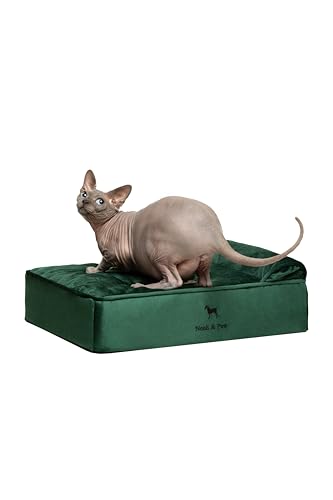
Memory foam support that takes pressure off arthritic joints during long naps

K&H Pet Products Heated Cat Bed
Gentle, body-warm heat to relax stiff muscles and ease morning stiffness

Zesty Paws Omega-3 Fish Oil for Cats
EPA and DHA to support joints, skin, and coat as part of a comfort plan

Product picks are researched, not veterinary advice. As an Amazon Associate we earn from qualifying purchases.
Beyond products, the highest-impact home changes are: a litter box with a low entry, food and water raised slightly off the floor so your cat does not have to crouch, non-slip runners on slick floors, ramps or steps to favorite perches, and keeping everything your cat needs on one accessible level so they never have to climb stairs for the basics. Gentle, willing play also helps keep stiff joints moving.
Working With Your Vet Over Time
Chronic pain is managed, not cured, so plan on an ongoing partnership with your veterinarian. Expect periodic rechecks to adjust medications, monitor kidney and liver values, and reassess as your cat ages. Keep notes at home on mobility, appetite, grooming, litter habits, and mood so you can report real changes rather than impressions. With a thoughtful, vet-led plan, most older cats can stay comfortable and engaged well into their senior years.
Related Guides
- Signs Your Old Cat Is in Pain - A closer look at the hidden cues of feline discomfort.
- Arthritis in Senior Cats - The most common driver of chronic pain in older cats.
- Best Orthopedic Cat Beds - Supportive bedding to ease aching joints.
Editor's Pick · Affiliate link
A Stainless Steel Fountain for a Senior Cat
Chronic kidney disease is the most common serious diagnosis in older cats, and moving water is the easiest way to raise daily intake. Stainless steel stays cleaner than plastic, which matters on a bowl that runs all day.
Frequently Asked Questions
How do I know if my older cat is in chronic pain?
Cats hide pain instinctively, so the signs are subtle and easy to miss. Watch for a cat that no longer jumps to high spots, hesitates on stairs, sleeps more and lower to the ground, grooms less or develops a scruffy coat over the back and hips, has started missing the litter box, hides more, or has become irritable about being handled. None of these look dramatic, which is exactly why feline chronic pain so often goes untreated. Any of them in a senior cat warrants a vet visit.
What is the most common cause of chronic pain in senior cats?
Osteoarthritis is by far the most common. X-ray studies have found arthritis in the majority of cats over 12 years old and in nearly all very elderly cats, most often in the elbows, hips, knees, shoulders, and spine. Dental disease is another major and frequently overlooked source of ongoing pain. Less common causes include cancer, old injuries, and certain internal diseases. A vet exam, and often imaging, identifies what is actually driving the pain.
Can I give my cat human pain relievers?
No, and this is critical. Common human pain medicines are dangerous or fatal to cats. A single acetaminophen (Tylenol) tablet can kill a cat, and ibuprofen, aspirin, and naproxen are also highly toxic to them. Cats lack key liver enzymes that other species use to process these drugs. Never give your cat any human medication, and never give a cat a dog's medication either, without explicit veterinary direction. Only a vet can prescribe pain relief that is safe for cats.
What pain treatments are safe for cats?
Several feline-specific options exist. Solensia (frunevetmab) is a monthly injection approved specifically for cat arthritis pain. Vets may also use cat-formulated NSAIDs such as robenacoxib (Onsior), gabapentin for pain and anxiety, buprenorphine for stronger relief, and sometimes others, often combined in a multimodal plan. Many of these require monitoring, especially in cats with kidney disease, which is why pain control in cats must be vet-directed rather than do-it-yourself.
What can I do at home to ease my cat's pain?
Plenty, alongside veterinary treatment. Provide orthopedic and heated beds, add ramps or steps to favorite perches, switch to a litter box with a low entry, raise food and water bowls slightly, lay non-slip runners on slick floors, and keep everything your cat needs on one accessible level. Gentle play and short, willing movement help keep stiff joints mobile. These changes reduce the daily strain on sore joints and often make a visible difference in how your cat moves and rests.
Do joint supplements help with feline pain?
Some can play a supporting role, though they are not a substitute for veterinary pain control. Omega-3 fish oils have reasonable evidence for reducing joint inflammation in cats, and glucosamine and chondroitin products formulated for cats are widely used. Effects are gradual and modest rather than dramatic. Always choose cat-specific products and check with your vet before starting any supplement, particularly if your cat has kidney disease or takes other medication.
Is it worth treating pain in a very old cat?
Yes. Age is not a disease, and untreated chronic pain erodes a cat's quality of life at any age, affecting appetite, sleep, grooming, litter habits, and temperament. Modern feline pain management is safer and more effective than it was even a few years ago, and many very old cats become noticeably brighter, more mobile, and more themselves once their pain is controlled. Quality of life, not the number on the calendar, is what matters.
Need more help with your aging cat?
Browse our guides by topic to find practical solutions.
Wellness Planner: $39